|


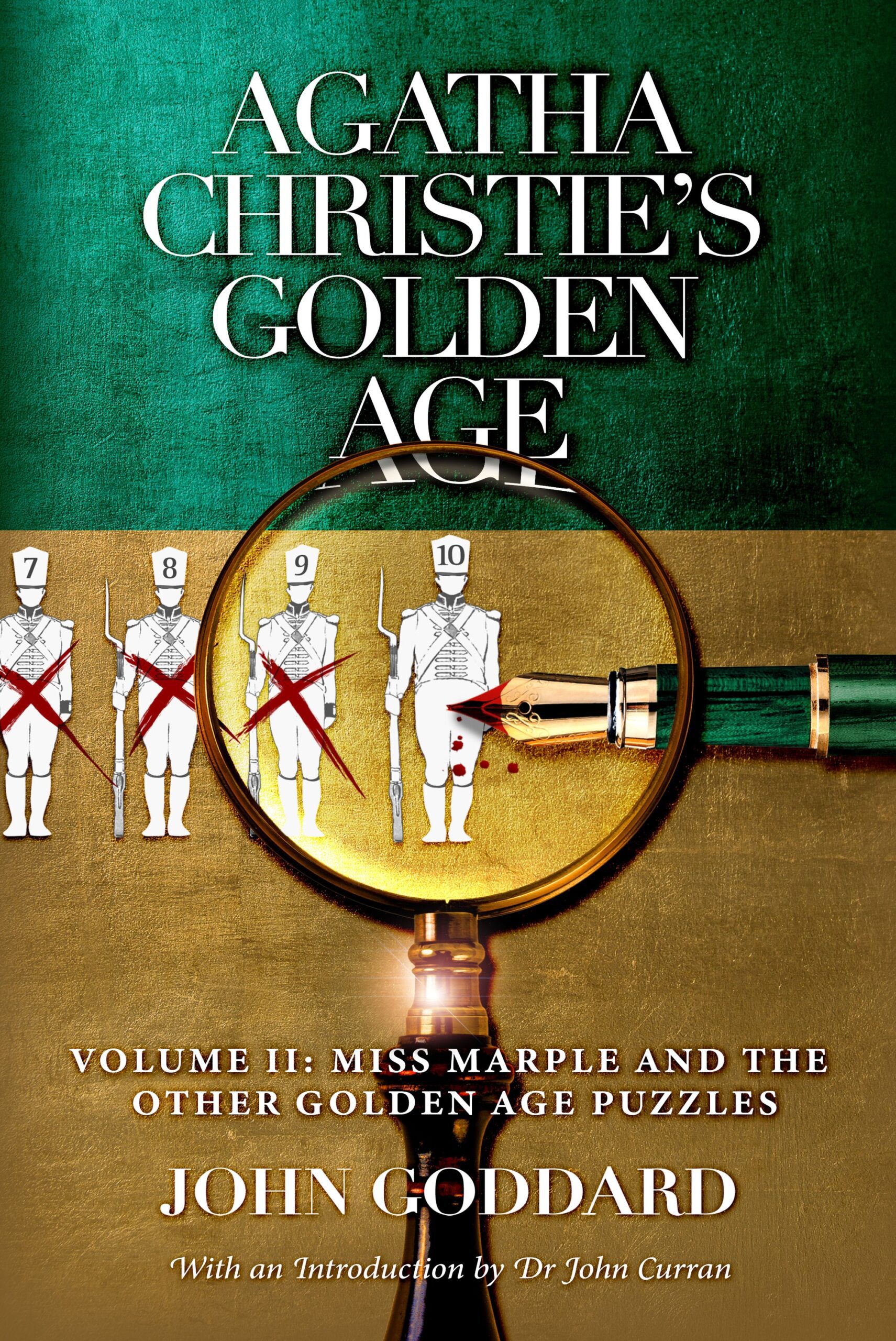
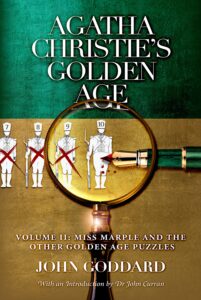
Agatha Christie’s Golden Age – Volume II
Miss Marple and the other Golden Age puzzles
by John Goddard
Volume II of Agatha Christie’s Golden Age is the companion work to Volume I, which provided the first comprehensive definition of the puzzle elements in Agatha Christie’s novels, proposing the idea that murder stories could be deconstructed into three puzzle elements – Solution, Plot and Clues.
Volume I then analysed how well those puzzle elements worked in the 21 novels of her principal detective, Hercule Poirot, published during what can fairly be regarded as the Golden Age of detective fiction (1918 – 1945). Volume II adopts the same technique with the 13 non-Poirot novels which Christie published during the Golden Age, including three Miss Marple novels, two Tommy and Tuppence thrillers and her most famous and popular novel, And Then There Were None.
As Dr John Curran, the leading Agatha Christie expert, says in his Introduction, Volume II again provides an accessible way for readers – not just Christie scholars but her general readership – to understand how the novels work as puzzles. It also gives readers the chance to re-live, at a readable length, the intrigue or cosiness of a favourite novel from a new perspective, reminding them how much they enjoyed, or were intrigued by, a particular solution, plot or clue and perhaps enabling them to appreciate points which they had not previously spotted.
Like Volume I, Volume II is unofficial in the sense that it has not been sponsored by Agatha Christie’s estate but is the culmination of an extensive independent critical study of her work by the author. He brings to this challenge not only the enthusiasm and warmth of a lifelong Christie fan but also the forensic skills of a former lawyer who was for many years a partner in a major City firm in London.

Agatha Christie’s Golden Age

John's passion for Agatha Christie’s detective stories ignited at the age of 11 in 1967, captivated by Tom Adams’ striking paperback covers. Joining the Agatha Christie Crime Collection in 1969, he treasured his Membership Certificate. In the following years, he voraciously consumed all of Christie’s detective tales, drawn by the intricate forensic analysis of clues.
Christie’s passing in 1976 coincided with his studies at Magdalene College, Cambridge, and a waning frequency of re-readings. John Le Carré’s "Tinker Tailor Soldier Spy" emerged as a new favorite. Balancing a legal career in London, culminating in partnership at Freshfields, with his hobby of naval medal research and writing, he laid the groundwork for his later literary endeavors.
In the late 1990s, he encountered Professor Robert Barnard’s "A Talent to Deceive," sparking a new analytical approach to Christie’s work. From 2005 onward, he meticulously researched and wrote about Christie’s novels, drawing on his legal background for forensic insight.
Retiring in 2010, he dedicated himself fully to writing from his Wimbledon home, shared with his wife Linda, two adult children, and a loquacious feline companion.